The Chinese University of Hong Kong, Shenzhen (CUHK-Shenzhen)
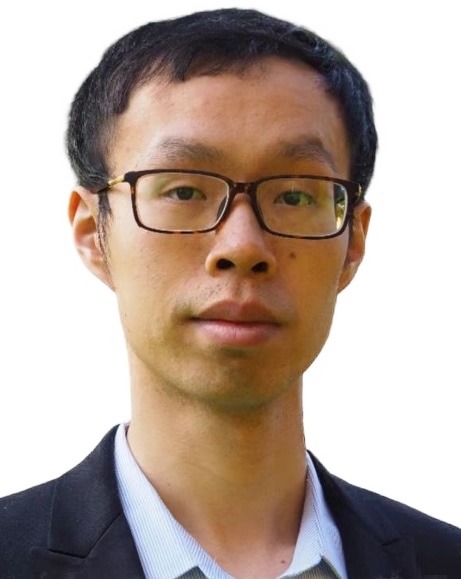
I am an Assistant Professor at The Chinese University of Hong Kong, Shenzhen (CUHK-Shenzhen). Prior to joining CUHK-Shenzhen, I worked in industry for over two years, with hands-on experience in building hardware data models and deploying design-automation solutions in real-world settings.
I received my Ph.D. in Electrical Engineering from EPFL, Switzerland, co-advised by Prof. Giancarlo Ferrari-Trecate and Prof. Maryam Kamgarpour. Prior to that, I obtained my M.Sc. in Electrical Engineering and Information Technology from ETH Zürich.
My research sits at the intersection of Control Theory, Mathematical Optimization, and Machine Learning, with an emphasis on developing safe, sample-efficient algorithms for real-world cyber-physical and automated engineering systems.
We are seeking highly motivated students and researchers to join our group at CUHK-Shenzhen. Candidates from Electrical Engineering, Computer Science, Automation, Applied Mathematics, and related fields are warmly welcome.
-
Ph.D. Students: Fully funded positions are available. We welcome candidates who stand out in at least one of the following areas:
- Solid mathematical foundations — numerical algebra, probability theory, differential equations, and operations research & optimization;
- Complete project experience in deep learning or reinforcement learning;
- Hands-on experience in robot motion control (locomotion and manipulation).
- Postdocs: Fully funded positions with competitive financial support; candidates with research experience related to our directions are encouraged to apply.
- Research Assistants (RA): Positions open year-round. RAs are expected to carry out a full-semester research project, aiming for top-tier publications.
How to Apply: If you are interested, please send an email to guobaiwei@cuhk.edu.cn with the subject format [Application - Position] Your Name - University. Please attach your CV, transcripts, and any representative publications/code links.
Research Directions
In control and hardware optimization, model-based methods rely heavily on manual expertise and struggle in complex scenarios, while learning-based methods demand massive data and are difficult to trust. We therefore pursue the synergy of these two paradigms, striving to create control and optimization methods that are efficient and robust.
A Flexible and Resilient Optimization Platform via Agentic AI
We are building an optimization platform that unifies control and hardware design under a single architecture:
- Agentic problem abstraction. Agentic AI translates multimodal engineering inputs — images, audio, sensor signals — into well-posed mathematical formulations.
- Mixed-integer, unified architecture. Hybrid discrete-continuous decisions are supported natively, with diverse problem settings served without architectural changes.
- Sample-efficient Bayesian optimization. Classical-optimization acceleration (trust regions, structured surrogates) turns previously intractable problems into solvable ones.
Trustworthy Learning-Augmented MPC for Embodied Intelligence
We combine learning-based methods with model-based MPC for efficient, interpretable, and trustworthy control of embodied systems:
- Amortizing MPC with imitation learning. Learned policies inherit the interpretable MPC structure, replacing intractable real-time optimization with a single forward pass.
- Safe, model-free hyperparameter tuning. Bayesian optimization with sampling safety guarantees reconciles conflicting design objectives.
- Bridging the sim-to-real gap. Enabling reliable transfer of MPC-based controllers to physical robots.
Hardware-Control Co-Design via Bi-Level Bayesian Optimization
Hardware and control are still designed in isolation, capping system performance. We co-optimize them as one coupled problem via bi-level Bayesian optimization:
- Bi-level co-optimization. An outer BO loop searches hardware designs; the embedded inner loop of numerical optimization synthesizes the matching controller.
- Tractable joint search. Meta-learned warm starts let the inner loop converge within a few iterations.
- High-impact applications. Energy reduction in intelligent driving, and robot morphology-control co-design for agile, efficient robots.
Selected Publications
* indicates equal contribution. Full list available on Google Scholar.
Honors & Awards
- Best Student Paper Award, European Control Conference (ECC) (1/300+), 2023
- Nomination for Thesis Distinction, EPFL, 2023